
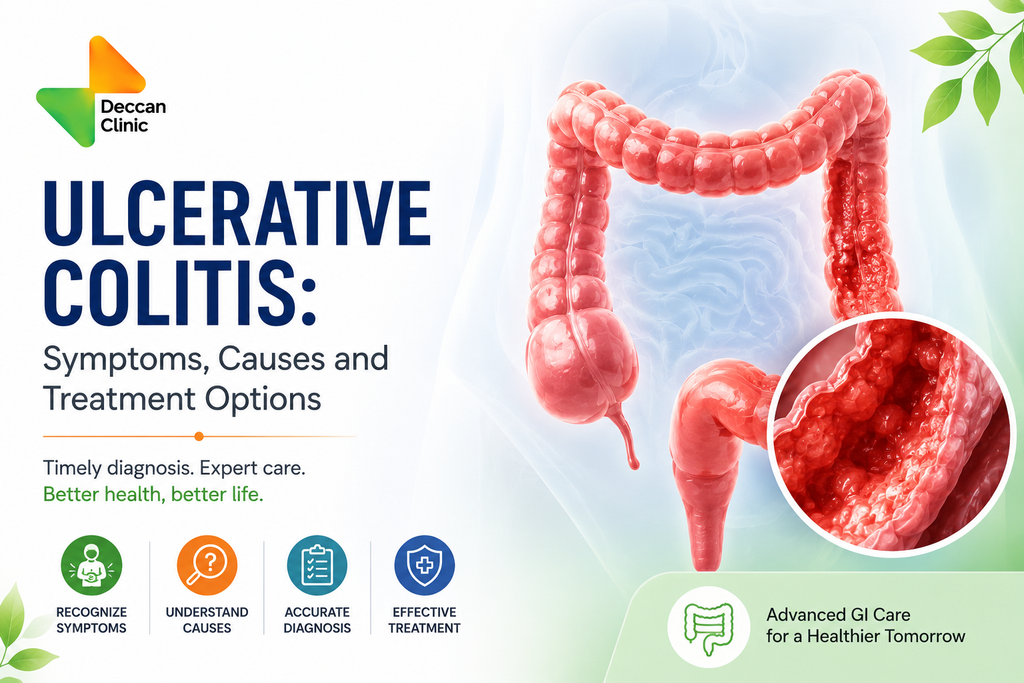
Ulcerative colitis is a chronic inflammatory bowel disease (IBD) that primarily affects the inner lining of the colon and rectum. It can cause inflammation, ulcers and recurring digestive symptoms that may interfere with daily life. Understanding ulcerative colitis symptoms, causes and treatment options can help patients seek appropriate medical care and manage the condition effectively.
Deccan Clinic lists ulcerative colitis among the conditions treated under its Colon & Rectum and GI surgery services. Its gastrointestinal surgical team also provides specialized surgical treatment, including J-pouch surgery for selected patients.
What Is Ulcerative Colitis?
Ulcerative colitis is a long-term condition in which inflammation develops in the lining of the large intestine. The disease can vary in severity and may go through periods of active symptoms, known as flare-ups, followed by periods when symptoms improve or disappear.
Unlike some temporary digestive problems, ulcerative colitis generally requires ongoing medical management and monitoring.
Common Symptoms of Ulcerative Colitis
The symptoms can differ depending on how much of the colon is affected and the severity of inflammation. Common ulcerative colitis symptoms include:
- Frequent or urgent bowel movements
- Persistent diarrhea
- Blood or mucus in the stool
- Abdominal cramps or pain
- Rectal discomfort
- A strong urge to have a bowel movement
- Fatigue or weakness
- Unexplained weight loss
- Reduced appetite
Some people may experience mild symptoms, while others can develop severe inflammation and complications. Persistent blood in the stool or significant changes in bowel habits should be evaluated by a healthcare professional.
What Causes Ulcerative Colitis?
The exact causes of ulcerative colitis are not completely understood. It is believed to involve an abnormal immune response in which the body’s immune system mistakenly attacks cells in the digestive tract.
Genetic factors, immune-system activity and environmental influences may all play a role. Having a family history of inflammatory bowel disease may also increase the likelihood of developing the condition.
Ulcerative colitis is not simply caused by eating a particular food, although certain foods may worsen symptoms during an individual’s flare-ups.
How Is Ulcerative Colitis Diagnosed?
Diagnosis generally begins with a detailed medical history and physical examination. Doctors may recommend blood and stool tests to look for signs of inflammation, infection or anemia.
A colonoscopy may be performed to examine the colon and rectum and assess inflammation or ulcers. During the procedure, tissue samples may also be collected for laboratory examination. Deccan Clinic’s GI cancer and colorectal services include colonoscopy as an important diagnostic investigation for diseases affecting the colon and rectum.
Ulcerative Colitis Treatment Options
Treatment depends on the severity and extent of the disease. Many patients can manage ulcerative colitis with medications designed to reduce inflammation and control symptoms. Dietary adjustments and regular medical follow-up may also be recommended.
For patients who develop severe complications or do not respond adequately to medical treatment, surgery may be considered. Surgical options depend on the individual’s condition and may include procedures to remove the affected colon. In selected cases, J-pouch surgery may be considered to restore bowel function after removal of the colon and rectum. Deccan Clinic specifically lists J-pouch surgery for ulcerative colitis among its GI surgical expertise.
When Should You See a GI Specialist?
Persistent diarrhea, recurrent abdominal pain, blood in the stool, unexplained weight loss or significant changes in bowel habits should not be ignored. Early evaluation can help identify the cause and determine whether further testing is needed.
People already diagnosed with ulcerative colitis should maintain regular follow-up with their healthcare team, particularly if symptoms suddenly become worse.
Conclusion
Ulcerative colitis is a chronic condition that can affect the colon and significantly impact quality of life if left unmanaged. Recognizing ulcerative colitis symptoms and seeking timely medical advice can help with diagnosis and appropriate treatment. Depending on the severity of the disease, management may include medication, lifestyle measures and, in selected cases, surgery.
For persistent digestive symptoms or concerns about ulcerative colitis, consult a qualified GI specialist to receive an evaluation and personalized treatment plan. Deccan Clinic in Pune provides gastrointestinal and colorectal surgical care for conditions including ulcerative colitis.