
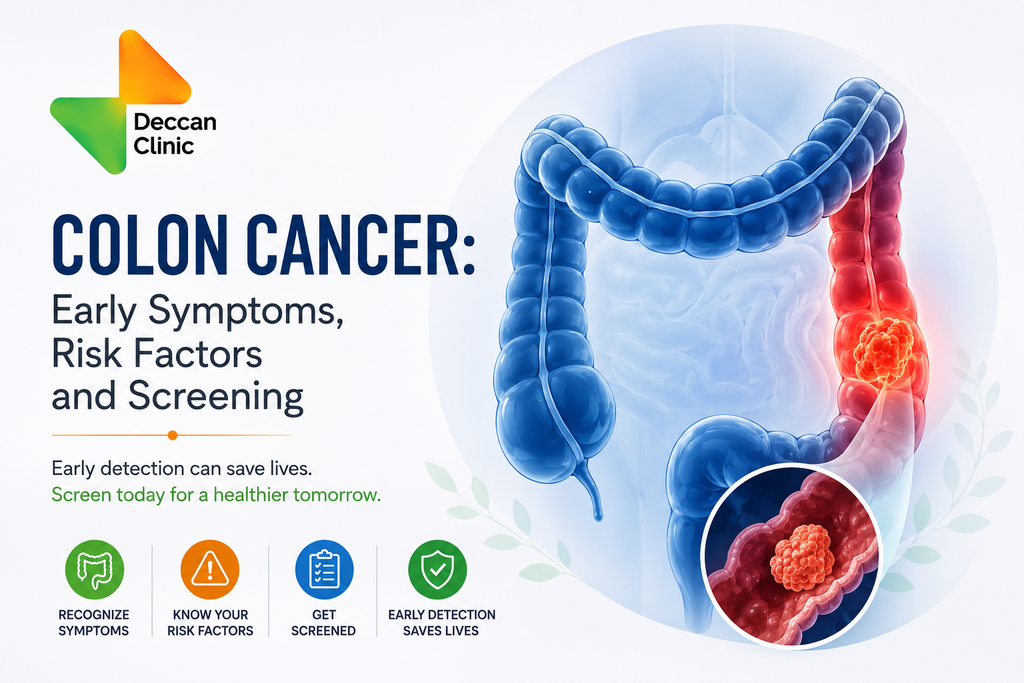
Colon cancer, also known as colorectal cancer when it involves the colon or rectum, develops when abnormal cells in the large intestine begin growing uncontrollably. It may initially cause few or no noticeable symptoms, which is why understanding risk factors and appropriate screening is important. Deccan Clinic provides specialized care for gastrointestinal cancers, including colon and rectal cancers.
What Is Colon Cancer?
The colon is the major part of the large intestine and plays an important role in absorbing water and forming stool. Colon cancer can develop from abnormal growths called polyps that form on the inner lining of the colon. Some types of polyps can gradually become cancerous.
Early detection can make a significant difference in treatment planning. Depending on the location and stage of the cancer, treatment may involve surgery, chemotherapy, radiation therapy, targeted therapies or a combination of approaches.
Early Symptoms of Colon Cancer
Colon cancer symptoms can vary from person to person. Some common warning signs include:
- A persistent change in bowel habits
- Diarrhea or constipation that does not resolve
- Blood in the stool or rectal bleeding
- Narrower-than-usual stools
- Persistent abdominal discomfort, cramps or bloating
- Unexplained weight loss
- Persistent tiredness or weakness
- A feeling that the bowel has not completely emptied
Blood in the stool or a persistent change in bowel habits should not automatically be assumed to be piles or another minor digestive problem. Several conditions can cause similar symptoms, so proper medical evaluation is important.
Colon Cancer Risk Factors
The risk of developing colon cancer can increase with age, although younger adults can also develop the disease. Other factors may include a family history of colorectal cancer or certain inherited conditions, previous colorectal polyps, inflammatory bowel diseases, obesity, physical inactivity, smoking and diets associated with higher consumption of processed or red meats.
Having a risk factor does not mean that a person will definitely develop colon cancer. However, people with increased risk may need individualized screening or earlier evaluation.
Why Is Colon Cancer Screening Important?
Screening can help detect colorectal cancer before symptoms appear. It may also identify certain precancerous polyps, which can sometimes be removed before they develop into cancer.
A colonoscopy is one of the important tests used to examine the colon and rectum for polyps or abnormal areas. Depending on an individual’s age, symptoms, family history and overall risk, a doctor may recommend colonoscopy or other appropriate screening methods. Deccan Clinic lists colonoscopy among the diagnostic tests used for gastrointestinal cancers.
How Is Colon Cancer Diagnosed?
If symptoms or screening results raise concerns, doctors may recommend additional investigations. These can include blood tests, colonoscopy, imaging studies and a biopsy, in which a tissue sample is examined to determine whether cancer cells are present.
Further tests may be required to determine the cancer’s stage and whether it has spread to other parts of the body. This information helps doctors develop an appropriate treatment plan.
Colon Cancer Treatment
Treatment depends on factors such as the cancer’s location, stage, overall health and individual treatment needs. Surgery may be recommended to remove the affected portion of the colon. Deccan Clinic lists laparoscopic and minimally invasive approaches among its GI cancer treatment options, including laparoscopic colectomy.
Depending on the case, surgery may be combined with chemotherapy, radiation therapy, targeted treatment or other cancer therapies.
When Should You See a Doctor?
Do not ignore persistent changes in bowel habits, unexplained weight loss, abdominal discomfort or blood in the stool. Early medical evaluation can help identify the cause and determine whether further testing is necessary.
If you have a family history of colon cancer, previous polyps or other risk factors, discuss an appropriate screening plan with your doctor.
Conclusion
Colon cancer may not always produce obvious symptoms in its early stages, making awareness and appropriate screening important. Recognizing warning signs and seeking timely medical evaluation can support earlier diagnosis and treatment. If you have concerning digestive symptoms or are at increased risk of colorectal cancer, consult a qualified GI or surgical oncology specialist for personalized advice. Deccan Clinic offers diagnosis and treatment services for gastrointestinal cancers, including colon and rectal cancer, in Pune.